

The Importance of Gritting Roads and the Process
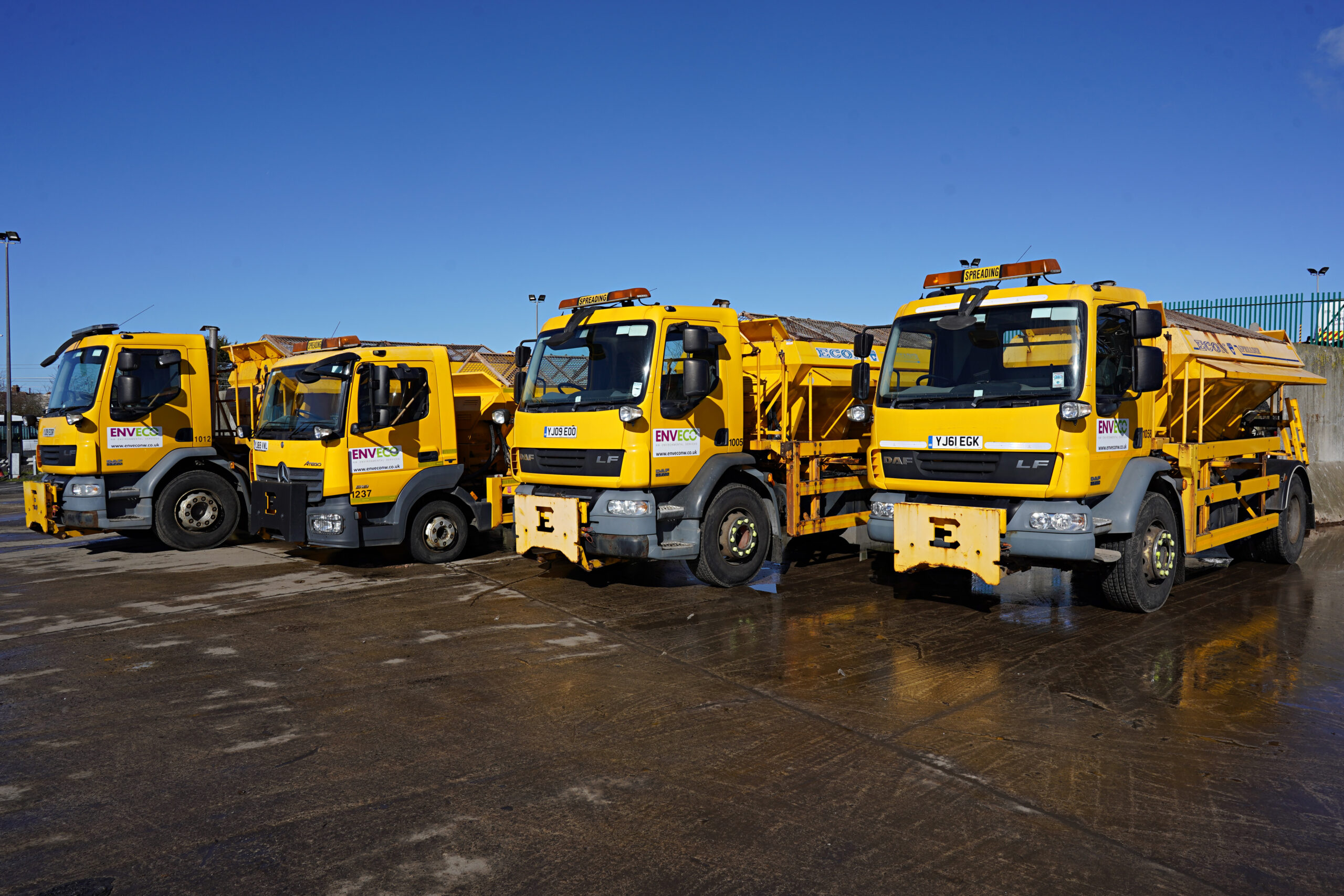
Winter weather can bring challenging conditions, especially when snow and ice are expected. In Blackpool, Enveco NW delivers the winter gritting service on behalf of Blackpool Council ‘Highways Authority,’ known locally as “Operation Snowdrop,” to provide a safer traveling environment for highway users and reduce traffic disruption.
Let’s take a look at how the gritting team prepares for snowy days/nights and how they keep our streets safe despite the weather.
Preparation for Snow and Ice
When the weather forecast predicts snow or ice, we act quickly. For example, on Friday, January 3rd, the gritting team met to discuss the weather conditions for the weekend. With a yellow/amber weather warning in place from the Met Office, we knew we would need to be extra cautious and prepared. We had an additional reserve team on standby, as we expected a long shift of gritting to keep the roads safe.
Constant monitoring of the changeable weather systems, by the Winter Maintenance Manager, was made to ensure the team was able to be reactive to an everchanging weather system.
The Gritting Process
On the evening of the 4th of January 2025 – it became apparent the team was required to preliminarily grit the primary and secondary roads. The data showed that significant snowfall was predicted; however, its frequency and amount were less quantifiable – although – the team always air on the side of caution, and the initial preliminary grit was for a snow event, at a frequency of 20 g/m2.
The team gritted from the first pass at 19.20pm on Saturday 4th January 2025 – through to Sunday 5th January, at 8.30am. A total cycle of 7 passes was completed in this timeframe, with over 160 tonnes of road grit applied to the road network – for context a standard treatment of one pass on the network would use approximately 12 tonnes. The spread rates varied from a minimum of 20 g/m2 – to the maximum spread rate possible of 40 g/m2.
Why We Grit Roads
The aim of the preventative and continued gritting through a 13-hour shift were two-fold. It is paramount to ensure a significant layer of road grit is applied to the road surface to allow a saline solution to form, thus lowering the freezing temperature of water – thereby more specifically in the case of the expectant snow – to assist the process of not allowing the snow to bind and freeze to the road surface – hence a protective layer of road grit applied before the snow was predicted to fall – and secondly road traffic then assists the process of mixing the road grit and falling snow.
Snowfall and Road Safety
Throughout the early evening, and into the early hours of Sunday morning – the gritting team had managed to successfully apply four preliminary grits, and only small bouts of sleet were apparent, and with traffic moving on the road network, the combination of such ensured the roads were free of snow being able to stick (freeze) to the road surfaces.
As 3.00am on Sunday morning approached – the additional traffic on the road had significantly ceased, and this was the time when the snowfall became significant in its frequency and amount. Whilst the team continually gritted through this period – the secondary crucial element of road traffic to prevent the snow from sticking to the road surface, was sadly lacking – however due to the pre-emptive gritting – the team knew once traffic increased, the snow would not be frozen road surface – but we simply just need traffic to appear – but I am sure you can appreciate between the heaviest snowfall rate of 3.00am to 7.00am on Sunday morning – unfortunately road traffic was indeed sparse. Culminating in the effectiveness of gritting, being diminished to a degree.
The above being said, the team were quite pleased to note that once a reasonable element of traffic appeared from 7.00am on Sunday morning. In terms of commuters, selected bus routes and of course the teams who was continual gritting road surfaces, were indeed passable to careful motorists, although granted the driving conditions were challenging.
The Impact of Pre-Gritting
The Winter Manger Says:
“We understand and apologise for any inconvenience experienced to residents on the morning of Sunday 5th of January. As the unusual snow event and rare yellow/amber Met Office warning for snowfall became apparent on the Fylde Coast. We were well prepared and pleased that the pre-planned and preventative gritting of the network ensured that emergency services could navigate the road network throughout. Buses could operate from their first timetabled routes on Sunday morning, commuters were able to arrive at their places of work, and we have had no significant reports of accidents or stranded vehicles due to snow.”
Conclusion
When snow and ice are expected, the gritting team works tirelessly to ensure the safety of all road users. While road grit can’t stop snow from falling, it does create a protective layer that helps prevent the snow from freezing onto the road. This layer of salt, combined with the action of traffic, ensures that the roads remain as safe as possible.